
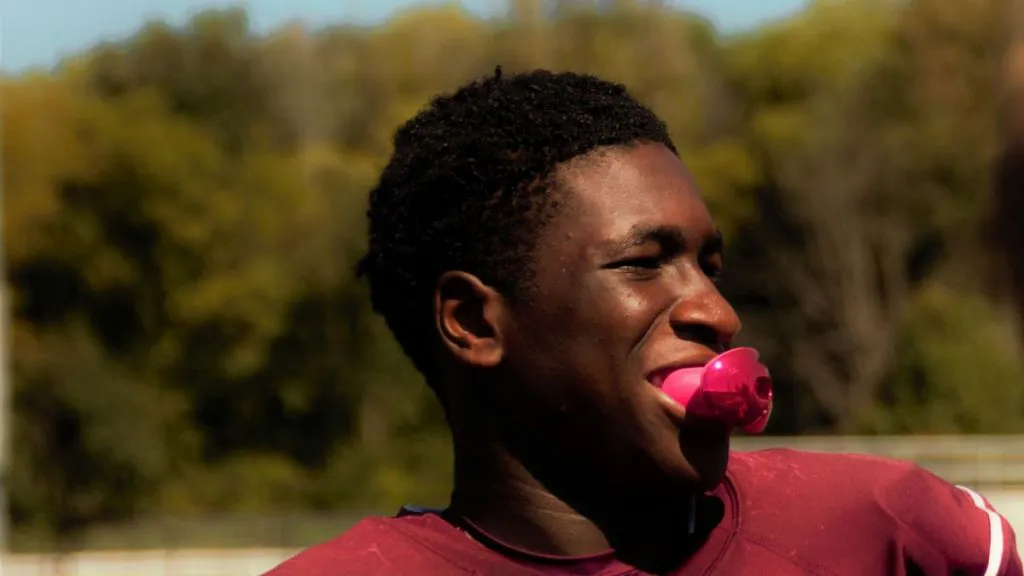
It’s a Saturday morning at a youth football field off Cleveland Avenue. A player goes down, gets up holding his mouth, and a parent in the bleachers suddenly realizes nobody packed a plan for this.
Fall is peak season for sports in Central Ohio. Football, soccer, volleyball and cross country are in full swing, and hockey and basketball are right around the corner. With all that contact comes a real risk of chipped, cracked and knocked-out teeth.
At Northgate Family Dentistry, we see these injuries every fall. Dr. Zachary Hickman is a volunteer youth sports coach himself, so he knows how fast a game can turn. This guide covers how to protect your athlete’s teeth, what to do in the first minutes after an injury, and when to call our Columbus office for same-day care.
Which Sports Put Teeth at Risk?
Football and hockey get the most attention, and for good reason. But plenty of other sports carry a risk of mouth injuries too:
- Contact sports: football, hockey, lacrosse, rugby and wrestling
- Ball and stick sports: baseball, softball, field hockey and basketball
- Fast-moving sports: soccer, volleyball and skateboarding
- Individual sports: martial arts, boxing and gymnastics
The American Dental Association (ADA) recommends that athletes in sports with a risk of contact or falls wear a mouthguard. That covers far more activities than most families expect.
Key takeaway: if your athlete could take a ball, elbow or fall to the face, a mouthguard belongs in the gear bag.
Store-Bought vs. Custom Mouthguards
You have a few options, and they don’t all protect the same way.
Stock mouthguards
These come ready to wear from sporting goods stores. They’re inexpensive, but they often fit loosely. A loose guard can make it hard to breathe and talk, so many athletes end up chewing on it or leaving it out.
Boil-and-bite mouthguards
You soften these in hot water and bite into them to shape the fit. They fit better than stock guards, but the result depends on how well the molding goes.
Custom-made mouthguards
A custom guard is made from an impression of your athlete’s teeth. At Northgate Family Dentistry, we offer custom sports mouthguards that fit well, protect well and can be worn for any sport.
Because a custom guard fits snugly, it tends to stay in place during play and feels less bulky. Athletes who are comfortable wearing their guard are more likely to actually keep it in. That’s where the protection comes from.
Adults need protection too. Weekend rec leagues, pickup basketball and adult hockey games cause plenty of dental injuries, and adult teeth often have crowns, fillings or bridges that are expensive to repair. If you play, the same advice applies to you.
Mouthguard Care Tips for the Season
A mouthguard only works if it’s clean and in good shape. Share these tips with your athlete:
- Rinse the guard before and after each use
- Brush it gently with a toothbrush and cool water
- Store it in a vented case, not loose in a gym bag
- Keep it out of hot cars and direct sun, which can warp the plastic
- Replace it if it cracks, tears or stops fitting well
Growing kids and teens may outgrow a mouthguard as their teeth and jaws change. If your child has had a growth spurt or new teeth have come in, bring the guard to their next checkup so we can look at the fit.
What to Do If a Tooth Gets Knocked Out
A knocked-out permanent tooth is a true dental emergency. Acting quickly gives you the best chance of saving it. Follow these steps:
- Find the tooth. Pick it up by the crown (the part you chew with). Don’t touch the root.
- Rinse it gently if it’s dirty. Use milk or water for a few seconds. Don’t scrub it or wrap it in a tissue.
- Try to put it back in the socket. If you can, gently push it into place and have the athlete bite on a clean cloth or gauze to hold it.
- If you can’t reinsert it, keep it moist. Place it in a small container of milk. An older child or adult can also hold it inside the cheek, as long as there’s no risk of swallowing it.
- Call us right away at (614) 882-4400. Time matters. The sooner a dentist sees the tooth, the better the chances.
Baby teeth are different. If a young child knocks out a baby tooth, don’t try to put it back in, since that can damage the permanent tooth growing underneath. Call us so we can check the area.
Chipped, Cracked and Loose Teeth
Not every sports injury knocks a tooth out completely. Other common injuries include:
- Chipped teeth: Save any pieces you find and rinse the mouth with warm water. A cold compress on the cheek can help with swelling.
- Cracked teeth: A crack may cause pain when biting or sensitivity to hot and cold. Cracks can grow, so have it checked soon.
- Loose or shifted teeth: Don’t try to wiggle the tooth. Have the athlete bite down gently to keep it in position and call us.
- Cut lips, cheeks or tongue: Apply gentle pressure with clean gauze. Seek emergency medical care if bleeding won’t stop.
How we repair sports damage
Once the area has calmed down, we’ll look at the best way to restore the tooth. Depending on the damage, that might mean tooth-colored bonding for a small chip, a crown for a larger break, or root canal treatment if the nerve was injured. Root canals and extractions can be done right in our office, with the team you already know. You can read about these services on our general dentistry page.
If the injury involves a possible head injury, loss of consciousness, a broken jaw or trouble breathing, go to the emergency room or call 911 first. Dental care can follow once the athlete is stable.
Same-Day Emergency Care in Columbus
Dental injuries don’t wait for a convenient time. Our emergency dental care is set up so new patient emergencies can be seen as soon as possible, almost always the same day. You don’t need to already be a patient, and you’re not required to join our regular care program to get short-notice help.
When you call, our team will give you instructions over the phone and fit you into the schedule. A fast diagnosis and treatment can make a real difference in saving a tooth.
If a tooth can’t be saved, we’ll talk through replacement options. Our office places and restores dental implants in-house, so you won’t need to be referred to another office.
We’re located at 6061 Cleveland Avenue, just off I-270, Route 161 and Route 3. That makes us a short drive from many fields and school campuses in north Columbus.
Our hours are Monday 8 a.m. to 5 p.m., Tuesday 7 a.m. to 3 p.m., Wednesday 10 a.m. to 6 p.m., Thursday 8 a.m. to 5 p.m. and Friday 8 a.m. to 2 p.m. If an injury happens on a weekend or evening, follow the first-aid steps above and call us as soon as possible at (614) 882-4400. Our phone menu has an emergency option that will get you through to the doctor. Head to an emergency room for anything serious.
Frequently Asked Questions
Does my child really need a mouthguard for soccer or basketball?
Mouthguards are a good idea for any sport with a risk of falls or contact to the face. The ADA recommends mouthguards for a wide range of sports, not just football and hockey. A custom guard is comfortable enough that many young athletes don’t mind wearing it.
How do I get a custom mouthguard at Northgate Family Dentistry?
Call our office to schedule a visit. We’ll take an impression of your athlete’s teeth and have a guard made to fit their mouth. Ask about timing when you call if the season has already started.
What should I do if my child’s permanent tooth gets knocked out on the weekend?
Follow the steps above: handle the tooth by the crown, rinse gently, and try to reinsert it or store it in milk. Then call us as soon as possible at (614) 882-4400. Don’t wait for Monday: our phone menu has an emergency option that will get you through to the doctor. If there are signs of a head injury or heavy bleeding, go to the nearest emergency room first.
Can braces wearers use a sports mouthguard?
Yes, athletes with braces should still wear a mouthguard. Talk with us or your child’s orthodontist about the best type of guard to fit around brackets and wires.
Protect Your Athlete’s Smile This Season
A custom mouthguard costs far less time and stress than repairing a broken tooth. Get one before the next big game, and keep our number in your phone in case an injury happens anyway.
Dr. Zachary Hickman and our team have served families in Columbus and nearby communities for nearly 20 years. You can learn more about our general dentistry services and meet Dr. Hickman before your visit.
Call Northgate Family Dentistry at (614) 882-4400 to schedule a mouthguard fitting or emergency visit. You can also reach us through our contact page or fill out your new patient forms ahead of time.
Northgate Family Dentistry
Zachary Hickman, DDS
6061 Cleveland Avenue
Columbus, OH 43231
(614) 882-4400
This article is general information, not a substitute for professional dental or medical care. In a serious injury, call 911 or go to the nearest emergency room.